
What is Colorectal Liver Metastasis?
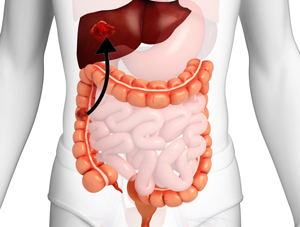
Colorectal liver metastasis occurs when cancer cells from the colon or rectum spread to the liver. This is a common progression for colorectal cancer because the blood supply from the intestines drains directly to the liver via the portal vein. Once in the liver, cancerous cells can form new tumors, which may impact liver function and overall health. Early detection and targeted treatment are key to improving outcomes.
Pathophysiology of Colorectal Liver Metastasis
CRLM typically arises when malignant cells from a primary colorectal tumor invade blood vessels, enter the portal venous system, and travel to the liver. Once in the hepatic parenchyma, these cells adhere to the sinusoidal endothelium, extravasate, and proliferate, forming metastatic deposits.
Clinical Presentation of Colorectal Liver Metastasis
Many individuals with CRLM are asymptomatic in the early stages, especially when the lesions are small. When symptoms do occur, they may include:
- Right upper quadrant abdominal pain
- Fatigue
- Weight loss
- Hepatomegaly
- Jaundice (in advanced disease)
In some cases, CRLM may be detected incidentally during imaging for follow-up or staging of the primary colorectal tumor.
Diagnosis of Colorectal Liver Metastasis
During the evaluation of suspected CRLM, your healthcare provider may involve a combination of imaging and laboratory investigations involving:
Imaging Studies:
- Contrast-enhanced CT scan of the abdomen is the initial modality for detecting liver metastases.
- MRI with liver-specific contrast offers greater sensitivity for small lesions.
- PET-CT is useful for whole-body assessment to rule out extrahepatic disease.
Laboratory Tests:
- Elevated levels of carcinoembryonic antigen (CEA) can support the diagnosis but are not specific.
- Liver function tests (LFTs) may show abnormalities in advanced disease.
Histopathology: Biopsy of hepatic lesions may be performed when imaging is inconclusive or to confirm metastatic adenocarcinoma.
Treatment Strategies of Colorectal Liver Metastasis
Management of CRLM depends on the number, size, and location of liver lesions, patient’s performance status, and presence of extrahepatic disease.
- Surgical Resection: Liver resection remains the gold standard for curative treatment in selected patients. Long-term survival rates can exceed 50% at 5 years after complete resection.
- Systemic Chemotherapy: It is used in both neoadjuvant and adjuvant settings. Chemotherapy regimens are selected based on individual patient factors and are often combined with targeted therapies depending on the results of molecular profiling.
- Ablative Therapies: For non-resectable lesions or individuals unfit for surgery, radiofrequency ablation (RFA) or microwave ablation (MWA) may be considered.
- Liver-Directed Therapies: Transarterial chemoembolization (TACE) and Selective Internal Radiation Therapy (SIRT) can be used for palliative management.
Prognosis of Colorectal Liver Metastasis
The prognosis of CRLM varies significantly depending on the treatment modality and disease burden. Individuals undergoing curative resection have markedly better outcomes compared to those treated with palliative intent. Prognostic factors include:
- Number of liver lesions
- Size of metastases
- Interval between primary CRC and metastasis
- CEA levels
- RAS/BRAF mutation status
If you wish to be advised on the most appropriate treatment, please call to schedule an appointment or click to request an appointment online.